

Table of Contents
- How to Spot Quality Patriotic Shirts: Start With the Fabric
- How to Tell If a T-Shirt Is Good Quality: The Five-Point Inspection Checklist
- Quality T-Shirt Fabric and Construction: What Separates Good From Great
- Durable T-Shirt Printing: How to Judge Print Quality Before You Buy
- T-Shirt Fit Guide: Sizing, Drape, and Everyday Wearability
- Care and Long-Term Wear Testing for Patriotic Shirts
- Conclusion: Wear Your Values With Confidence
- Frequently Asked Questions
Last Updated: October 9, 2026
How to Spot Quality Patriotic Shirts: Start With the Fabric
Learning how to spot quality patriotic shirts starts with one thing: the fabric. Flip the tag before you flip the design. A bold flag graphic on thin, flimsy cotton will look tired after a few washes.
This guide from Say When Outfitters comes down to one idea. Most shoppers judge a patriotic tee by its design. They should judge it by its construction first. Below, we'll show you exactly how to inspect a shirt in under a minute.
Fabric tells you almost everything. It decides how the shirt feels, how it fits, and how long it lasts.
Fiber Content and Fabric Weight
Fiber content is the list of materials in the shirt, printed on the inside tag. Cotton is the standard for graphic tees because it breathes and holds print well.
Fabric weight matters just as much. It's measured in ounces per square yard. Here's the rough breakdown:
- Lightweight (under 5 oz): thin, best for hot weather
- Midweight (5-6 oz): the everyday sweet spot
- Heavyweight (6 oz and up): sturdy, holds its shape
For a patriotic tee you'll wear often, midweight cotton hits the mark. Check the tag first. If the tag is missing or vague, that's a red flag.
Softness and Hand Feel
Hand feel is how the fabric feels between your fingers. Soft cotton should feel smooth, not slick or stiff.
Press the fabric in your hand and let go. Good cotton springs back. Cheap fabric stays wrinkled. Rub the surface gently. If it pills right away, it will pill in the wash.
Heavyweight cotton can still feel soft. Weight and softness are not opposites. A well-made tee feels substantial without feeling rough.
How to Tell If a T-Shirt Is Good Quality: The Five-Point Inspection Checklist
You can judge a shirt in about 60 seconds. Use this five-point inspection before you buy, whether you're in a store or reading a product page. The goal is not to memorize brand names, it's to read the garment itself.
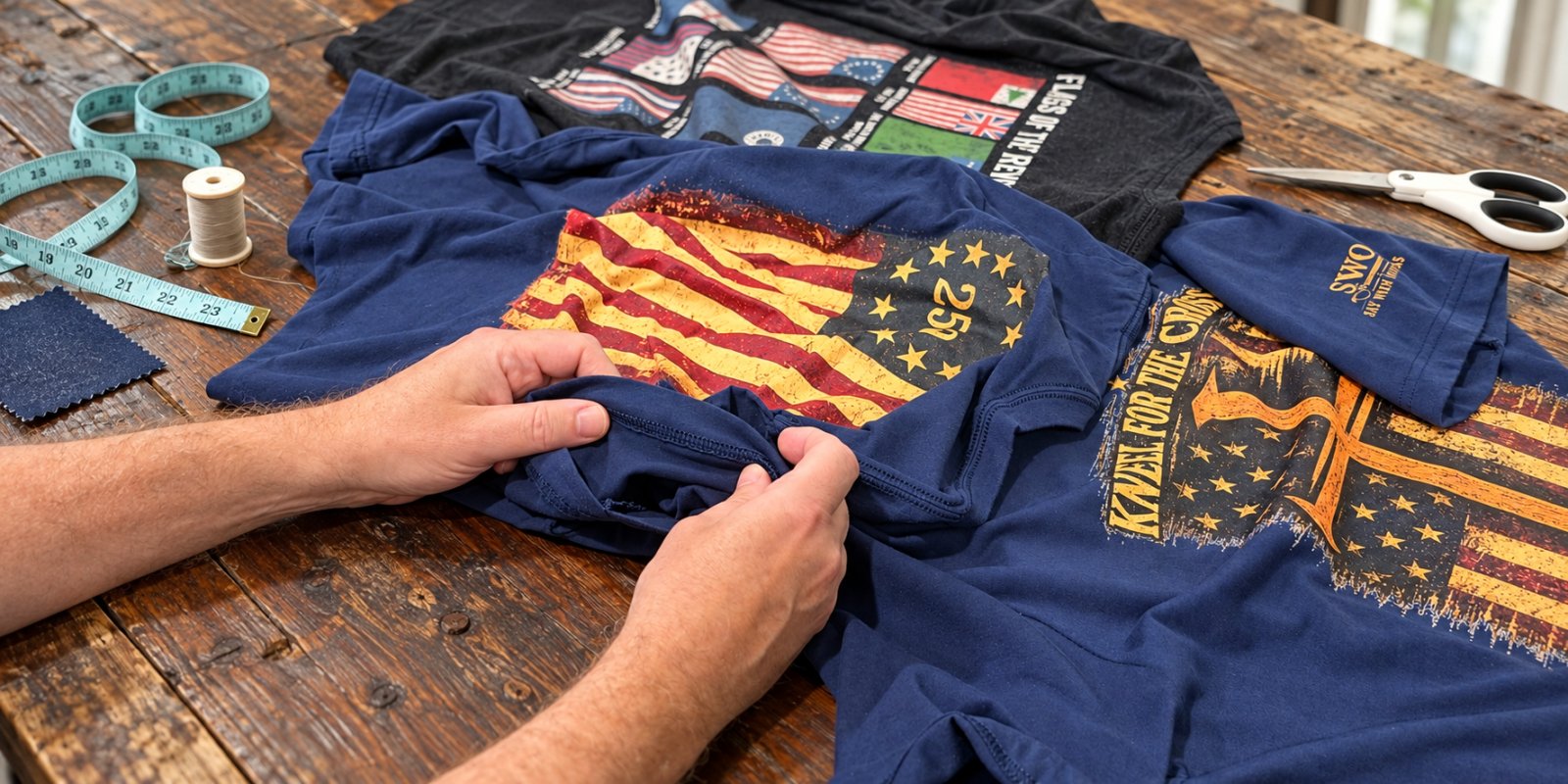
Run through these five checks in order. Each one takes about ten seconds.
1. Fabric, read the tag, then the hand. Check fiber content and weight on the inside tag. Cotton is the standard for graphic tees because it breathes and holds print well. Blends (cotton/polyester) can be softer and resist shrinkage, but they can also pill faster if the polyester content is high. Fabric weight is measured in ounces per square yard:
- Lightweight (under 5 oz): thin, best for hot weather, but shows print texture through the fabric
- Midweight (5-6 oz): the everyday sweet spot for a graphic tee
- Heavyweight (6 oz and up): sturdy, holds its shape, but can feel stiff until broken in
Press the fabric in your hand and let go. Good cotton springs back. Cheap fabric stays wrinkled. If the tag is missing or vague, treat that as a red flag.
2. Stitching, count the lines, not the threads. Look at the hem at the bottom and the sleeves. A good hem is straight and double-stitched. Single-stitched hems are the first thing to unravel. Check the side seams: double-stitched or felled seams distribute stress better than a single line of stitching. Loose threads hanging anywhere signal weak construction.
3. Seams, check the stress points. The shoulder seams and the neckline take the most strain. A taped neck and shoulder seam keeps the shirt from stretching out. A ribbed collar holds its shape; a thin, flimsy collar stretches out after a few wears.
4. Print, look at the edges and feel the surface. Look closely at the edges of the design. Sharp, clean edges mean a good print. Blurry or fuzzy edges mean a cheap one. Run your finger across the print. It should feel smooth, not thick and rubbery. Check the color: a strong print has full, even color with no thin spots.
5. Fit, confirm the cut matches how you plan to wear it. A quality tee should sit right in the shoulders and fall cleanly through the body. Shoulder seam sits at the edge of your shoulder. Sleeves end mid-bicep, not past the elbow. Body has room to move without looking baggy. Length covers your belt line without hanging low.
If a shirt passes all five checks, it's worth considering. If it fails two or more, walk away, no design is worth a shirt that falls apart in a month.
Quality T-Shirt Fabric and Construction: What Separates Good From Great
Good construction shows up in the details you can't see from across the room. Two shirts can look identical on a hanger and wear completely differently.
The difference usually comes down to three things: fabric weight, seam quality, and how the collar is built. A ribbed collar holds its shape. A thin, flimsy collar stretches out after a few wears.
Here's how the two compare:
Feature |
Quality Tee |
Cheap Tee |
|---|---|---|
Fabric weight |
Midweight, 5-6 oz |
Thin, under 5 oz |
Side seams |
Double-stitched |
Single-stitched |
Collar |
Ribbed, holds shape |
Flimsy, stretches out |
Shoulder seams |
Taped for support |
Plain, no tape |
Sharp, full coverage |
Faded, cracked edges |
Construction is not about brand names. It's about what you can see and feel. Learn the signs and you can judge any shirt on its own merits.
Durable T-Shirt Printing: How to Judge Print Quality Before You Buy
Durable T-shirt printing comes down to how the ink sits on the fabric. Good prints bond to the cotton and move with it. Bad prints sit on top and crack. The decoration method matters as much as the design file.
Know the three common decoration methods.
- Screen printing: Ink is pushed through a mesh screen, one color at a time. It's the most durable method for bold, multi-color graphics on cotton. The trade-off is that each color needs its own screen, so complex designs cost more to produce. A well-cured screen print outlasts the shirt itself.
- Direct-to-garment (DTG) printing: A printer deposits ink directly onto the fabric, similar to an inkjet printer. It handles photographic and gradient designs well, but the ink sits closer to the surface and can fade faster than screen print after repeated washing, especially on darker fabrics.
- Direct-to-film (DTF) printing: The design is printed onto a film, then heat-pressed onto the garment. It produces vibrant color on both light and dark fabrics and works well for detailed artwork. The key quality variable is the heat-press cure, an under-cured DTF print will peel at the edges.
Embroidery is a fourth option for logos and small marks. It's extremely durable but adds texture and weight, so it's rarely used for large flag graphics.
How to inspect a print before you buy.
Look closely at the edges of the design. Sharp, clean edges mean a good print. Blurry or fuzzy edges mean a cheap one. Run your finger across the print. It should feel smooth, not thick and rubbery. Check the color: a strong print has full, even color with no thin spots. If you can see the fabric through the ink, it won't last. Stretch the fabric gently under the print, a good print moves with the cotton; a bad one cracks along the fold lines.
How to test print durability at home.
You can't fully judge a print in the store. Here's a simple wash test:
- Wash the shirt inside out in cold water.
- Skip the high heat in the dryer, heat causes shrinkage, fading, and print cracking.
- Hang dry when you can. If you use a dryer, keep it on low.
- After five washes, check the print edges for cracking, peeling, or fading.
- Look for shrinkage in the length and sleeves, and check the collar for stretching.
A print that survives five wash-and-dry cycles with sharp edges and full color will likely hold up for years. One that fails was never worth the money.
Here at Say When Outfitters, our tees use a vibrant DTF print that won't crack, fade, or peel. That's the standard to hold any print to, regardless of the decoration method used.
T-Shirt Fit Guide: Sizing, Drape, and Everyday Wearability
Fit is where a good shirt becomes a favorite. A quality tee should sit right in the shoulders and fall cleanly through the body.
Drape is how the fabric hangs on your frame. Good cotton drapes smoothly instead of clinging or ballooning. Tapered shoulders help the shirt keep its shape wash after wash.
A quick fit check:
- Shoulder seam sits at the edge of your shoulder
- Sleeves end mid-bicep, not past the elbow
- Body has room to move without looking baggy
- Length covers your belt line without hanging low
Sizing runs differently across brands, so check the size chart every time. If you want a relaxed look, size up. Our Land of the Free tee fits true to size with tapered shoulders that hold their shape.

Care and Long-Term Wear Testing for Patriotic Shirts
Care decides how long a good shirt stays good. The right routine protects the fabric and the print at the same time.
Wash inside out in cold water. Skip the high heat in the dryer, since heat causes shrinkage and fading. Hang dry when you can. If you use a dryer, keep it on low.
Here's how to run your own wear test:
- Wash the shirt five times and check the print edges
- Look for shrinkage in the length and sleeves
- Check the collar for stretching
- Inspect the hem for loose threads
A shirt that passes this test after five washes will likely hold up for years. One that fails was never worth the money.
Conclusion: Wear Your Values With Confidence
The challenge is simple. Most patriotic shirts look great on the rack and fall apart in the wash. Knowing what to check changes that.
At Say When Outfitters, we build American-inspired apparel for people who want it to last. Our structured hats are made for real life. Our 250 Betsy Ross tee honors history with a print built to stay sharp.

Shop now with Say When Outfitters and wear your values without apology.
Frequently Asked Questions
What fabric should you look for in a quality patriotic shirt?
Look for 100% cotton or a cotton-rich blend. Cotton breathes, holds its shape, and takes print well. Check the fabric weight: shirts in the 4.5 to 6.5 oz range feel substantial without being stiff. Ringspun cotton is softer than standard cotton because the fibers are combed and spun finer. Avoid shirts that feel thin or see-through, as they tend to pill and lose shape quickly.
How can you tell whether a shirt's graphic will last?
Inspect the print edges. A durable print, like DTF (direct-to-film), sits smoothly on the fabric with clean edges and no cracking. Gently stretch the fabric where the graphic sits. If the print cracks or feels plasticky and raised, it may peel after a few washes. Also check that the design is printed into the fabric rather than sitting on top like a stiff decal.
How should a patriotic shirt fit?
A well-fitting patriotic shirt should sit comfortably on your shoulders with the seam landing at the edge of your shoulder, not hanging off. The body should skim your torso without pulling across the chest or bunching at the waist. Sleeves should end mid-bicep. If you prefer a relaxed fit, size up. Many quality tees, like those from Say When Outfitters, fit true to size with tapered shoulders that hold their shape wash after wash.
How do you care for a graphic T-shirt so it lasts?
Turn the shirt inside out before washing and use cold water on a gentle cycle. Avoid fabric softener, which can break down the print adhesive. Tumble dry on low or hang to dry. If ironing, never iron directly over the graphic; use a pressing cloth or iron inside out. Following these steps helps prevent fading, cracking, and shrinkage, keeping your patriotic shirt looking sharp for years.


